
Login
Support Sailonline
If you haven't already - join the SAILONLINE YACHT CLUB!
Please also consider making a donation - all amounts are greatly appreciated!
|
Posted by A2  |
|
|
This event is one of my favorites here at SOL. Evaluating the design offerings by the emerging class of budding naval architects gives this race its unique distinction.
IMSYC-66 C.O.R.E. values Methodology: I have chosen to employ an Ordinal ranking system that is common to duplicate bridge competition where the results are compared to players holding identical cards with bidding and sequence of play the only variables. This year the polar txt files provide data for 18 points of sail for each of 6 different wind speeds for a total of 108 data points. Within each data point a design is awarded 1 point for each design that it has a higher value than. Therefore with 11 designers represented 10 is the maximum award available for any given element and 5 is the median. Here for brevity's sake I will list only Upwind & Downwind composites utilizing TWAs of 90 and below for the former & 100 and higher for the latter. Comparative Ordinal Ranking Evaluation Boat . Upwind . Downwind A: ___ 9.46 ___ 9.28 B: ___ 8.35 ___ 8.18 C: ___ 8.22 ___ 6.49 D: ___ 6.37 ___ 7.64 E: ___ 6.03 ___ 6.82 F: ___ 3.59 ___ 5.66 G: ___ 4.87 ___ 3.62 H: ___ 4.37 ___ 2.56 I: ___ 2.32 ___ 1.31 J: ___ 0.69 ___ 2.18 K: ___ 0.72 ___ 1.27 This years leading design obtained a Max performance value at 83 of the 108 data points in the array demonstrating unparalleled excellence across the board for upwind & downwind points of sail in medium to light wind conditions. I have substituted letter codes for the boat designations so that others may conduct their own analysis without prejudice. --- Last Edited by 8mR Who at 2011-05-30 17:02:00 --- None so blind |
|
|
Posted by RainbowChaser  |
|
|
Now if THIS post doesn't generate discussion about the IMSYC boat designs this year then nothing will!!!

Thanks!! |
|
|
Posted by Rod  |
|
|
To 8mR Who
I have attempted to evaluate the 11 designs, but in a subjective way (not mathematical). I note also that two of the designs are clearly superior, but I also note that the maximum downwind performance occurs at different TWAs. Does your procedure account for performance characteristics of this kind? I assume that someone will run a 'router' simulation in a number of different wind regimes and derive a more exacting evaluation---but it won't be me, and therefore I conclude that I have little chance of winning for my design choice----but I will sail my eventual choice---and hope for the best.. If it breaks, it's not strong enough--if it doesn't, it's too heavy. |
|
|
Posted by A2 |
|
|
I have read the proposals provided by the link on the front page blog post of this site. The designers applied their VPP's to SailPlanner to estimate their optimized solutions.
Based solely on the published polar txt files provided by all the designs, the leading boat indicated by my list has the maximum value for 66 of the 72 points of sail for 8m/sec and below, conceding only 3 upwind TWAs to the 2nd place boat & 3 downwind TWAs to the 3rd place boat. To be sure all I have done is rank the values not predict a winner nor choose a route. This procedure however does narrow the field for those who wish to do a more definitive analysis. That being said I believe the best strategy is a well developed polar, your mileage may vary. --- Last Edited by 8mR Who at 2011-05-31 00:27:51 --- None so blind |
|
|
Posted by 76Trombones  |
|
|
This was a much trickier challenge than previous IMSYC, and I suspect that some of the students are glad to see the back of it!

Not only were the designers given free reign over pretty much every aspect of the hulls and rigs but they had to get them through a "slightly" finicky validation process (permission to throw crumpled up midterm exams at instructor). Oh, and write and debug a pretty solid VPP to boot! I'm always curious to hear more about the design process - a couple of the reports stand out from this point of view. I implemented Jakob and Mikael's code and spent a weekend monkeying with it. I did some "designing" but no optimising, which is usually much more work than fun... My "traditional" hull was built to be a minimum displacement, max LWL, min beam, min depth, min CP with full width flare (convex) at bow and stern. You'd never do the last part in particular designing IRL, but this exercise is in some ways the opposite of what racing boat designers usually do. Sort of VPP equivalent of a winged keel. Once the hull had been trialed I shifted the centres back a bit for a small boost. No limits imposed here, and probably a chance to exploit a loophole? Didn't investigate. My hulls were parametric. I can't imagine trying to get a digitised lines drawing through the checks. Another alternative would be to use CAD - Free!ship or any other NA package will generate tables of offsets that convert easily to the britfair format use here. Two rigs - a high aspect "wing" with no draggy headsails, and a one with spin. You pay full-time a weight penalty for the ability to carry a spin even with no jib set. Bummer 
The wing is faster through about TWA140-150. We'll have to make up VMG downwind by playing shifts. The trad rig is a better all-rounder maybe, but maybe less fun. ---- It's possible to built a "scow" hull with massive righting moment on a nice narrow immersed section. Tricky to pass the rules, and I had trouble keeping the VPP stable, but otherwise it's faster than the "monohull". There seems to be an unadvertised limit (hmm) that KG must be neg, which hurts this approach. I ended up carrying around unneeded lead. ---- Kudos to the design teams for their very hard work, and thanks to jakob for bringing this to SOL (or vice versa). Special thanks for sharing the course material. Better than a crossword!
76T |
|
|
Posted by sol  |
|
|
8mR would you go into a little more detail how you did this... i understand you ranked each boat on each TWA/TWS in the polar and then award 10 pnts to first, 9 to 2nd etc for each point, then what? Added them up for the upwind and downwind angles as you specified ?
And somehow normalised, how divide by 108? (or however many data points there were?) Awesome idea, including this for vmg angles would be extremely helpful... I take it you have a mac from your comment in 'Useful Free Tool' thread, so perhaps you may not be able to use this, atleast not without WINE or similar, but I posted a new tool over on soltools.wordpress.com that is particularly useful for this race
---------------- Who wrote this post please? --- Last Edited by RainbowChaser at 2011-06-07 08:33:58 --- |
|
|
Posted by A2 |
|
|
I tried to explain my methodology but I am more than willing to dispel any lingering confusion.
This is a ranking of the boat speeds achieved at each TWA for each W.S. listed in the polar txt files. There are 18 points of sail for each of 6 wind speeds. So it is a straight forward spreadsheet table. I divided those data points into 2 groups of 9 each, 30~90 & 100~180. If all the boat speeds are different, then you will do a sort and corresponding assign ordinal values of 10, 9, 8, 7, 6, 5, 4, 3, 2, 1 & 0 for those designs, at that data point. In some cases there are equal boat speeds listed in which case 1 point is awarded for each design that is below that mark & 0.5 for each design that it is equal with, for example; 10, 9, 8, 7, 5.5, 5.5, 4, 3, 2, 0.5 & 0.5 In an array of 11 boats the total for these ordinals is always 55. From there it is only just the basic average for the number TWAs for the given subset. All the upwind ordinals added together divided by 9 and likewise the downwind ordinals. This is done for each Wind Speed and then similarly averaged together. If not done in this fashion for simplicity's sake here in the forum, where formatting is not possible, there would be 108 separate categories, which is how the spreadsheet is organized prior to any averaging. In effect all upwind ordinals added together divided by 54 and then the same for the downwind ordinals. The numbers in the list represent the average ranking, not the boat speed. While this approach may not be very sophisticated and lacks quantitative specificity, it clearly identifies those boats at either end of the performance spectrum. --- Last Edited by 8mR Who at 2011-05-31 15:22:53 --- None so blind |
|
|
Posted by captjack1942  |
|
|
Did you take into account prevailing winds in the Western Med and East Atlantic in June?
http://www.offshoreblue.com/navigation/pilot-charts.php |
|
|
Posted by A2 |
|
|
The boat designers took into account the expected wind conditions, I have merely taken their output and compared them to each other. In doing so I identified a particular boat that is faster on 66 out 72 points of sail for 8m/sec and below wind conditions.
Not only that but it out performs the other boats going up wind at the higher wind speeds as well. It does not have the reaching capability in higher winds of the 3rd & 4th place boats however, so if the weather gives you that option for the majority of the race then you would be well advised to pick one of those. --- Last Edited by 8mR Who at 2011-05-31 16:58:59 --- None so blind |
|
|
Posted by sol |
|
|
Nice spinnaker lobe for the higher TWSs 76T!
No TWA=0 line though - which turned out to be a good thing as it made me modify the polar Explorer to handle such files... Any particular reason for not including it?? or a TWS=0 column? Sure they are only zeroes but nedded for correct interpolation of high TWA's or very low wind speeds... -------------------- Who wrote this post please? --- Last Edited by RainbowChaser at 2011-06-07 08:35:08 --- |
Races
Next Race: 00d 00h 00m
Current Races:
Mad Max by Balloon 2026 - Across the Outback

Mad Max Rockatansky doesn’t get to go in a balloon in any of the Legends of the Wasteland, and the Wasteland is not necessarily the Outback of Australia, but Mel Gibson and film director George Miller indubitably are… of Australia, and ballooning as reconnaissance is a main feature of the Mad Max spin-off video game, so here goes: 1500nm in a balloon from somewhere on the edge of the Outback, Goondiwindi, to cross a finish line at Fitzroy Crossing, somewhere on the edge of the Outback!
Race #1974
INFOby brainaid.de
SOL Balloon PARTICULARS
WX Updates:
0430 / 1030 / 1630 / 2230
Ranking: BOL - SYC
Race starts: Oct 14th 13:00 Registration Open!
GO TO RACE
Valdes Peninsula TIMED Race 2026
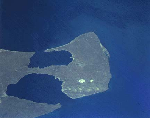
This is a TIMEDrace so you may RE-REGISTER HEREto try again after finishing a run. You will have two weeks to test your skill and decision making after the race opens.
Race #2066
INFOby brainaid.de
PARTICULARS
WX Updates:
0430 / 1030 / 1630 / 2230
Ranking:
TRQ4 - TRCH - SYC
RACE CLOSE: Saturday,
24 October at 23:00 UTC
Race starts: Oct 11th 12:00 Registration Open!
GO TO RACE
Roma Giraglia Regata 2026

Our eighth race of nine to celebrate all things Mediterranean - fickle winds, history and olive oil – is another buddy-up; this one with the Circolo Nautico Riva di Traiano . Founded in 1984, as the new Traiano yacht Harbour neared completion, the Circola since then has developed into one of the major yachting competition centres in Italy, and next to the 450nm Roma per Tutti (which SOL buddied earlier in the year), the Roma Giraglia Regata is its other headline offshore event. First raced in 2005, the 210nm course takes competitors from Traiano to a rock on the inside of the Ile de la Giraglia off the northern tip of Corsica and back to the Italian mainland for a finish in the bay of Santo Stefano. We’re racing this one in our Class 40!
Race #2058
INFO by brainaid.de
Class 40 PARTICULARS
WX Updates:
0430 / 1030 / 1630 / 2230
Ranking: MED - SUPBUD - SYC
Race starts: Oct 08th 16:00
Registration Closed
Arctic Tern - Greenland to Antarctica 2025

INFO by brainaid.de
Maxi Trimaran PARTICULARS
WX Updates:
0430 / 1030 / 1630 / 2230 Ranking:
OCQ4 - OCCH - SYC - MIG
Race starts: Oct 05th 11:00 Registration Closed
GO TO RACE
Cross the Convergence 2026 - Masirah to Chagos
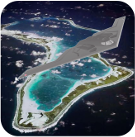
Having crossed, re-crossed and re-re-crossed the Convergence Zones of the Pacific and the Atlantic, we now face our second crossing of the Convergence Zone of the World’s third great equator-spanning sea, the Indian Ocean, taking us from the channel between Masirah Island and the Oman mainland to the Chagos Archipelago. It’s 1900nm and we’ll be sailing our very fine Archer 78, and won’t mention that both locations (of departure and arrival) are heavily militarized and the why’s and what next’s concerning that – mindful as always of SOL Netiquette.
Race #1988
INFOby brainaid.de
Archer 78PARTICULARS
WX Updates:
0430 / 1030 / 1630 / 2230
Ranking: CCZ - SYC
Race starts: Oct 02nd 18:00 Registration Closed
GO TO RACE
SYC Ranking

Series
- SYC ranking
- 2026 TSI
- 2026 TRQ4
- 2026 TRQ3
- 2026 TRQ2
- 2026 TRQ1
- 2026 TRCH
- 2026 TQD
- 2026 SUPerBUDdy
- 2026 SSANZ
- 2026 SPQ4
- 2026 SPQ3
- 2026 SPQ2
- 2026 SPQ1
- 2026 SPCH
- 2026 SHE
- 2026 ROW
- 2026 RNW
- 2026 RNI
- 2026 RMI
- 2026 RED
- 2026 OCQ4
- 2026 OCQ3
- 2026 OCQ2
- 2026 OCQ1
- 2026 OCCH
- 2026 NIA
- 2026 MIG
- 2026 MED
- 2026 LOOR
- 2026 CCZ
- 2026 BOL
- 2026 B2B
- 2025 TS
- 2025 TRQ4
- 2025 TRQ3
- 2025 TRQ2
- 2025 TRQ1
- 2025 TRCH
- 2025 TD
- 2025 SuperSOLer
- 2025 SSANZ
- 2025 SPRCH
- 2025 SPQ4
- 2025 SPQ3
- 2025 SPQ2
- 2025 SPQ1
- 2025 SHE
- 2025 SBB
- 2025 RWW
- 2025 RMI
- 2025 RED
- 2025 OCQ4
- 2025 OCQ3
- 2025 OCQ2
- 2025 OCQ1
- 2025 OCCH
- 2025 NT
- 2025 LOOR
- 2025 DN
- 2025 B2B
- 2025 ARQ4
- 2025 ARQ3
- 2025 ARQ2
- 2025 ARQ1
- 2025 ARCH
- 2025 ABS
- 2024 TS
- 2024 TRQ4
- 2024 TRQ3
- 2024 TRQ2
- 2024 TRQ1
- 2024 TRCH
- 2024 TD
- 2024 SVF
- 2024 SUPerSOLer
- 2024 SSANZ
- 2024 SPRQ4
- 2024 SPRQ3
- 2024 SPRQ2
- 2024 SPRQ1
- 2024 SPRCH
- 2024 SHE
- 2024 RTW
- 2024 RMS
- 2024 OCQ4
- 2024 OCQ3
- 2024 OCQ2
- 2024 OCQ1
- 2024 OCCH
- 2024 LOOR
- 2024 HILAT
- 2024 GWT
- 2024 DN
- 2024 CRW
- 2024 B2B
- 2024 ARQ4
- 2024 ARQ3
- 2024 ARQ2
- 2024 ARQ1
- 2024 ARCH
- 2023 TS
- 2023 TRQ4
- 2023 TRQ3
- 2023 TRQ2
- 2023 TRQ1
- 2023 TRCH
- 2023 TD
- 2023 SVS
- 2023 SUPerSOLer
- 2023 SSANZ
- 2023 SPRQ4
- 2023 SPRQ3
- 2023 SPRQ2
- 2023 SPRQ1
- 2023 SPRCH
- 2023 SHE
- 2023 RTW
- 2023 RNI
- 2023 RMS
- 2023 PIC
- 2023 OCQ4
- 2023 OCQ3
- 2023 OCQ2
- 2023 OCQ1
- 2023 OCCH
- 2023 LOOR
- 2023 DN
- 2023 ARQ4
- 2023 ARQ3
- 2023 ARQ2
- 2023 ARQ1
- 2023 ARCH
- 2022 TRQ4
- 2022 TRQ3
- 2022 TRQ2
- 2022 TRQ1
- 2022 TRCH
- 2022 TD
- 2022 Tall Ships
- 2022 SUPerSOLer
- 2022 SSANZ
- 2022 SSA
- 2022 SPRQ4
- 2022 SPRQ3
- 2022 SPRQ2
- 2022 SPRQ1
- 2022 SPRCH
- 2022 SHE
- 2022 OCQ4
- 2022 OCQ3
- 2022 OCQ2
- 2022 OCQ1
- 2022 OCCH
- 2022 NTR
- 2022 LOOR
- 2022 CTR
- 2022 ARQ4
- 2022 ARQ3
- 2022 ARQ2
- 2022 ARQ1
- 2022 ARCH
- 2021 TRQ4
- 2021 TRQ3
- 2021 TRQ2
- 2021 TRQ1
- 2021 TRCH
- 2021 TD
- 2021 Tall Ships
- 2021 SYCQ4
- 2021 SYCQ3
- 2021 SYCQ2
- 2021 SYCQ1
- 2021 SYCCH
- 2021 SUPerSOLer
- 2021 SSANZ
- 2021 SPRQ4
- 2021 SPRQ3
- 2021 SPRQ2
- 2021 SPRQ1
- 2021 SPRCH
- 2021 Shetland
- 2021 PAC6
- 2021 OCQ4
- 2021 OCQ3
- 2021 OCQ2
- 2021 OCQ1
- 2021 OCCH
- 2021 ESRW
- 2020 TSE
- 2020 TSA
- 2020 TRQ4
- 2020 TRQ4
- 2020 TRQ3
- 2020 TRQ2
- 2020 TRQ1
- 2020 TRCH
- 2020 Tasman Double
- 2020 SYCQ4
- 2020 SYCQ3
- 2020 SYCQ2
- 2020 SYCQ1
- 2020 SYCCH
- 2020 SUPerSOLer
- 2020 SSANZ
- 2020 SRQ4
- 2020 SRQ3
- 2020 SRQ2
- 2020 SRQ1
- 2020 SPRCH
- 2020 Shetland
- 2020 RTW
- 2020 RNI
- 2020 Odyssey
- 2020 OCQ4
- 2020 OCQ3
- 2020 OCQ2
- 2020 OCQ1
- 2020 OCCH
- 2020 A3
- 2019 TRQ4
- 2019 TRQ3
- 2019 TRQ2
- 2019 TRQ1
- 2019 TRCH
- 2019 Tasman Double
- 2019 Tall Ships
- 2019 SYCQ4
- 2019 SYCQ3
- 2019 SYCQ2
- 2019 SYCQ1
- 2019 SYCCH
- 2019 SUPerSOLer
- 2019 SSANZ
- 2019 SRQ4
- 2019 SRQ3
- 2019 SRQ2
- 2019 SRQ1
- 2019 SPRCH
- 2019 Shetland
- 2019 Round New Zealand
- 2019 OCQ4
- 2019 OCQ3
- 2019 OCQ2
- 2019 OCQ1
- 2019 OCCH
- 2018 TRQ4
- 2018 TRQ3
- 2018 TRQ2
- 2018 TRQ1
- 2018 TRCH
- 2018 Tasman Double
- 2018 Tall Ships
- 2018 SUPSOL
- 2018 SSANZ Triple
- 2018 SRQ4
- 2018 SRQ3
- 2018 SRQ2
- 2018 SRQ1
- 2018 SPRCH
- 2018 Shetland
- 2018 Shackleton Challenge
- 2018 OCQ4
- 2018 OCQ3
- 2018 OCQ2
- 2018 OCQ1
- 2018 OCCH
- 2018 40CH
- 2017 TS RDV
- 2017 TRQ4
- 2017 TRQ3
- 2017 TRQ2
- 2017 TRQ1
- 2017 TRCH
- 2017 Tasman Double
- 2017 Tall Ships
- 2017 SWR
- 2017 SUPSOL
- 2017 SSANZ Triple
- 2017 SSANZ RNI
- 2017 SPRR3
- 2017 SPRR2
- 2017 SPRR1
- 2017 SPRCH
- 2017 Red Dot
- 2017 OCQ4
- 2017 OCQ3
- 2017 OCQ2
- 2017 OCQ1
- 2017 OCCH
- 2017 40CQ3&4
- 2017 40CQ1&2
- 2016 TRQ4
- 2016 TRQ3
- 2016 TRQ2
- 2016 TRQ1
- 2016 TRCH
- 2016 Tasman Double
- 2016 Tall Ships
- 2016 SUPSOL
- 2016 SSANZ Triple
- 2016 SRQ4
- 2016 SRQ3
- 2016 SRQ2
- 2016 SRQ1
- 2016 SPRCH
- 2016 RTWR
- 2016 OCQ4
- 2016 OCQ3
- 2016 OCQ2
- 2016 OCQ1
- 2016 OCCH
- 2016 Corporate Open Gold
- 2016 A3
- 2015 TRQ4
- 2015 TRQ3
- 2015 TRQ2
- 2015 TRQ1
- 2015 TRCH
- 2015 Tasman Double
- 2015 Tall Ships
- 2015 SYQ4
- 2015 SYQ3
- 2015 SYQ2
- 2015 SYQ1
- 2015 SYCCH
- 2015 SUPSOL
- 2015 SSANZ Triple
- 2015 SRQ4
- 2015 SRQ3
- 2015 SRQ2
- 2015 SRQ1
- 2015 SPRCH
- 2015 OCQ4
- 2015 OCQ3
- 2015 OCQ2
- 2015 OCQ1
- 2015 OCCH
- 2015 Aegean Rally
- 2014 Timed Races Championship
- 2014 Tasman Double
- 2014 Tall Ships
- 2014 SYC Championship
- 2014 SSANZ Trio
- 2014 SSANZ RNI
- 2014 Sprints Championship
- 2014 Scandinavian Tour
- 2014 Round The World Race
- 2014 Ocean Championship
- 2014-2015 Sailonline World Race
- 2013 Tall Ships
- 2013 SYC Championship
- 2013 SSANZ B&G Simrad
- 2013 Capt Anderson
- 2012 W Australia Regatta
- 2012 Tall Ships
- 2012 SSANZ B&G Simrad
- 2012 RNZ Two Handed
- 2012 Global Challenge
- 2012 Ecker Cup
- 2012 Black Sea
- 2012 A3
- 2011 Vancouver Island
- 2011 Tasman Double
- 2011 SSANZ B&G Simrad
- 2011 SOL Global Challenge
- 2011 SJORA Series
- 2011 Scandinavian Tour
- 2011 Round North Island
- 2011 Asian Sprints
- 2011-2012 SOL World Race
- 2010 Tasman Double
- 2010 Ouzo Rally
- 2010 Iberian Tour
- 2010 Auckland Regional
- 2009 French SOLo
- 2009 Bosphore - Bretagne
- 2008 SYCC
- 2008 -2013 SYC Week Race Championship
- 2008 -2013 SYC Week-End Race Championship
- 2008 -2013 SYC Ocean Race Championship
- 2008-2009 Sailonline Ocean Race
- 2004 LOOR
Mobile Client
SYC members have the benefit of access to our mobile/lightweight web client!